Hargeisa –1958–1960In the late 1950s, U.S. policy in the Horn of Africa was shaped by the imperatives of the Cold War. Washington’s overriding objective was to contain Soviet influence and prevent the spread of Arab nationalist currents aligned with Moscow. Ethiopia, under Emperor Haile Selassie, was seen as a stable anchor in the region. The United States encouraged Ethiopia to moderate Pan‑African affairs, resolve border disputes with Somaliland, and cooperate on shared economic resources.
At the same time, Somalia was viewed as fragile and vulnerable.
Newly independent in 1960, Somalia lacked economic foundations and was susceptible to external manipulation.
To counter this, the U.S. encouraged Italy, the UK, and other allies to provide aid and stabilize Somalia, while considering the merger of British Somaliland and Somalia as a way to strengthen regional political arrangements. Strategic assets such as Kagnew Station in Eritrea underscored the importance of Ethiopia and the Horn in America’s Cold War architecture.
1. The Shift to Contemporary Interests
Today, the geopolitical map has changed dramatically.
The Cold War imperatives of Soviet containment no longer exist. Instead, Washington’s interests in the Horn of Africa are defined by the geography of the Red Sea and Gulf of Aden one of the world’s most critical maritime corridors
Somaliland, strategically positioned at the mouth of the Bab al‑Mandab Strait, has emerged as a stable and democratic partner in a volatile region. Its resilience contrasts sharply with Somalia’s fragility.
The U.S. now prioritizes counterterrorism, freedom of navigation, and access to critical minerals.
Somaliland offers unique advantages in all three areas: proximity to Yemen for monitoring Houthi activity, potential basing opportunities to complement Camp Lemonnier in Djibouti, and untapped mineral resources vital for America’s defense and technology industries.
2. Somaliland’s Restored Independence Somaliland declared independence in 1960, aligned with the principle of uti possidetis juris, which affirms inherited colonial borders. Its voluntary union with Somalia in July 1960 collapsed in 1991, and Somaliland has since maintained three decades of stability, democratic governance, and effective institutions.
In December 2025, Israel formally recognized Somaliland, underscoring its legitimacy and strategic importance.
This recognition highlights the need for Washington to withdraw its outdated consideration of a forced union between Somaliland and Somalia.
The geopolitical reality is clear: Somaliland is not a breakaway entity but a restored state, with historical sovereignty and international partners already acknowledging its status.
3. Why U.S. Recognition Aligns with National Interests Recognition of Somaliland is no longer a question of charity or symbolic diplomacy; it is a matter of U.S. national interest.
Red Sea Security: With Hormuz destabilized, the Bab al‑Mandab corridor is indispensable. Somaliland’s ports and coastline provide unmatched leverage for securing freedom of navigation.
• Counterterrorism: Somaliland’s stability strengthens U.S. efforts against Al‑Shabaab and extremist networks.
• Critical Minerals: Access to Somaliland’s lithium and coltan reserves supports America’s strategic supply chains.
• Alliance Building:
Recognition would align Washington with Israel, Ethiopia, and Gulf partners who see Somaliland as a stabilizing force.
4. Conclusion
The United States must acknowledge that the geopolitical logic of 1958–1960 containment of Soviet influence and support for a Somali union no longer applies.
The present reality demands a recalibration. Somaliland has restored its independence, proven its stability, and gained recognition from Israel. America’s strategic interests in Red Sea security, counterterrorism, and critical minerals converge in Somaliland.
Recognition of Somaliland is not only consistent with international law but also essential to advancing U.S. national interests in the Horn of Africa.
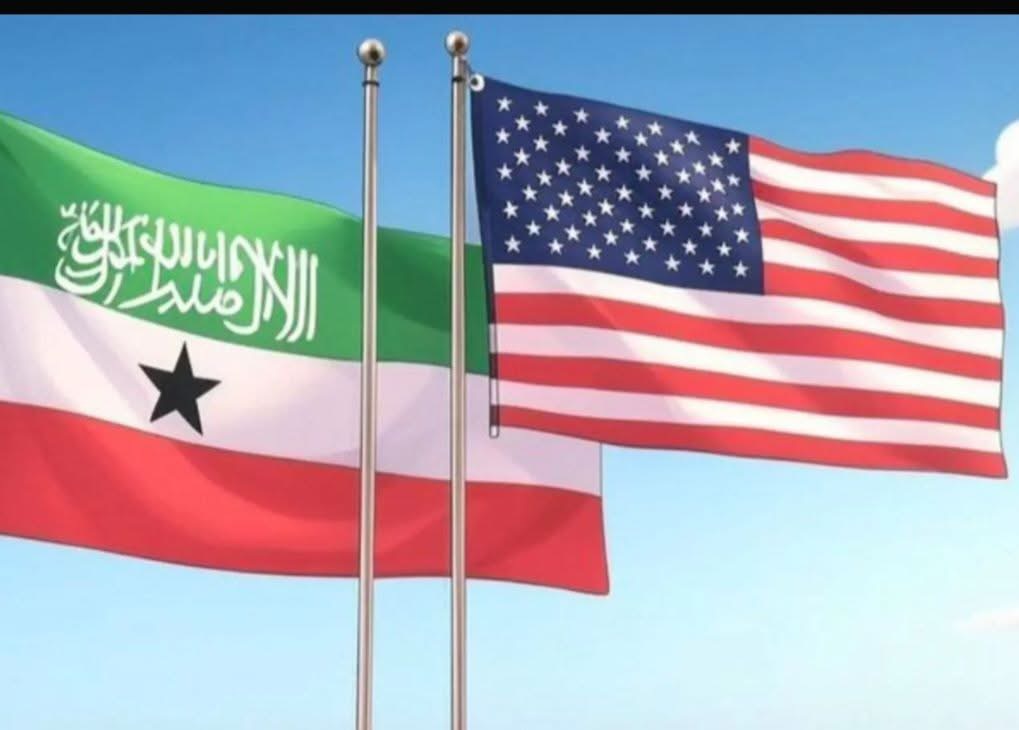
Washington must move beyond outdated frameworks and embrace Somaliland as a sovereign partner in safeguarding one of the world’s most vital maritime corridors.
BY Mohamed Mohamoud Hashi